Non-Profit

Board
Consulting
BOARD ASSESSMENTS
✦
TOOLS & RESOURCES
✦
VISIONING
✦
STRATEGY
✦
BOARD DEVELOPMENT
✦
BOARD ASSESSMENTS ✦ TOOLS & RESOURCES ✦ VISIONING ✦ STRATEGY ✦ BOARD DEVELOPMENT ✦
Effective board governance is one of the most consequential factors in a nonprofit organization's long-term health. Boards that function well provide strategic clarity, institutional accountability, and the organizational culture that sustains mission over time. Boards that struggle create friction, slow leadership, and erode the confidence of staff, donors, and stakeholders.
Daniel Vogelzang works with nonprofit boards and their leadership teams to diagnose governance challenges, strengthen board culture and structure, and build the practices that allow a board to do its best work. His approach is grounded in direct board service: Daniel currently serves as Chair at Gordon-Conwell Theological Seminary, one of the largest accredited seminaries in North America.
Governance Advisory, Strategy, Facilitation, and Best Practices
Visioning & Strategy
Many boards struggle to articulate a shared vision that actually guides decision-making—rather than sitting in a document no one references. Daniel facilitates structured visioning processes that bring Trustees, executive teams, and key stakeholders into alignment around a compelling, actionable direction. The output is a strategy the board owns, not one handed down by a consultant.
Board Assessments & Training
Through qualitative inquiry—board member interviews, committee reviews, governance document analysis—Daniel surfaces the hidden dynamics, structural gaps, and behavioral patterns that undermine board performance. Findings are delivered as a practical improvement roadmap, not a report that sits on a shelf.
Coaching & Advisory
The board chair and executive leader relationship is one of the most important and most difficult. Daniel works with both roles individually and together, building transparency, trust, and shared accountability across the governance-management boundary.
When does a board need an external consultant?
Leadership transition. A founding executive director is retiring, or a new president or CEO is stepping in. Transitions are the highest-risk moment for governance breakdown and the best opportunity to reset board culture and structure before problems calcify.
Board dysfunction. Trustees are disengaged, committees aren't functioning, or the board-staff relationship has become strained. These patterns rarely self-correct without outside perspective and structured intervention.
Strategic inflection point. The organization is facing a significant decision—a merger, a capital campaign, a programmatic expansion, a rebranding—and needs the board aligned and functional to navigate it well.
Governance maturity. A growing nonprofit that has relied on informal practices needs to build the structures appropriate to its current size and complexity: recruitment processes, committee charters, conflict of interest policies, succession planning.
Frequently Asked Questions
What does a nonprofit board governance consultant do?
A board governance consultant works with a nonprofit's board and leadership team to assess governance health, strengthen board structure and culture, facilitate strategic planning, and coach key leaders. The goal is a board that governs effectively—providing strategic direction, institutional accountability, and mission stewardship—without overreaching into management.
How is governance consulting different from strategic planning?
Strategic planning produces a plan. Governance consulting addresses the people, structures, and culture that determine whether any plan gets implemented well. The two often go together—a board that can't make decisions or maintain alignment will struggle to execute even the best strategy—but they are distinct engagements with different objectives.
How long does a board governance engagement typically take?
This varies widely. A board assessment and recommendations process can be completed in two to four weeks. A full visioning and strategic planning process typically runs three to six months, including stakeholder engagement, synthesis, and adoption. Ongoing coaching and advisory relationships are structured as monthly retainers.
Do you work with faith-based organizations?
Yes. Daniel's active board service at a major theological seminary, combined with experience across faith-based nonprofits and mission organizations, means he understands the governance dynamics, culture, and leadership challenges specific to these institutions. Theological identity, donor relationships, and denominational accountability all shape how governance works in a faith context, and that context requires a consultant who understands it firsthand.
What does nonprofit board governance consulting cost?
Project-based engagements—board assessments, visioning processes, facilitated retreats—are typically quoted as flat fees based on scope, and generally range from $5,000 to $25,000. Ongoing advisory and coaching relationships are structured as monthly retainers. A free initial consultation is available to discuss your organization's needs and determine whether there's a fit.
governance for faith-based institutions
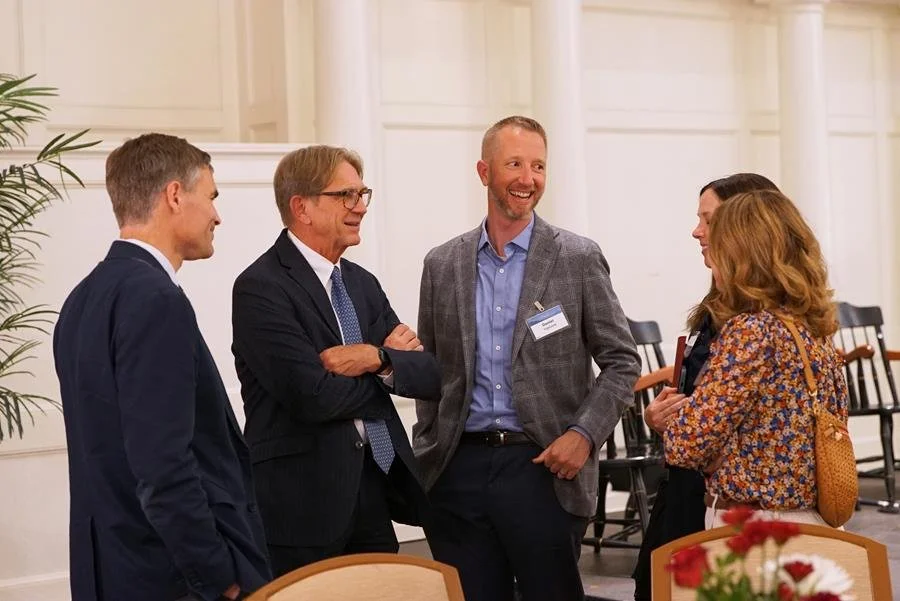
Currently, I have the privilege of serving Gordon-Conwell Theological Seminary as Chair of the Board. I also serve on the Governance Committee where we focus on developing the Board’s best practices, culture, and recommending new Trustees.
As a Trustee, I was invited to lead an institution-wide strategic visioning process, resulting in the guiding strategy that is in practice today. Serving on the Seminary’s board is a privilege and I am delighted to use my gifts to advance our mission.

let’s chat.
Fill out the form and we can schedule a time to discuss how I can help advance your board and institutional leadership.